
Cambo
Investing in domestic production to drive UK value creation and energy security
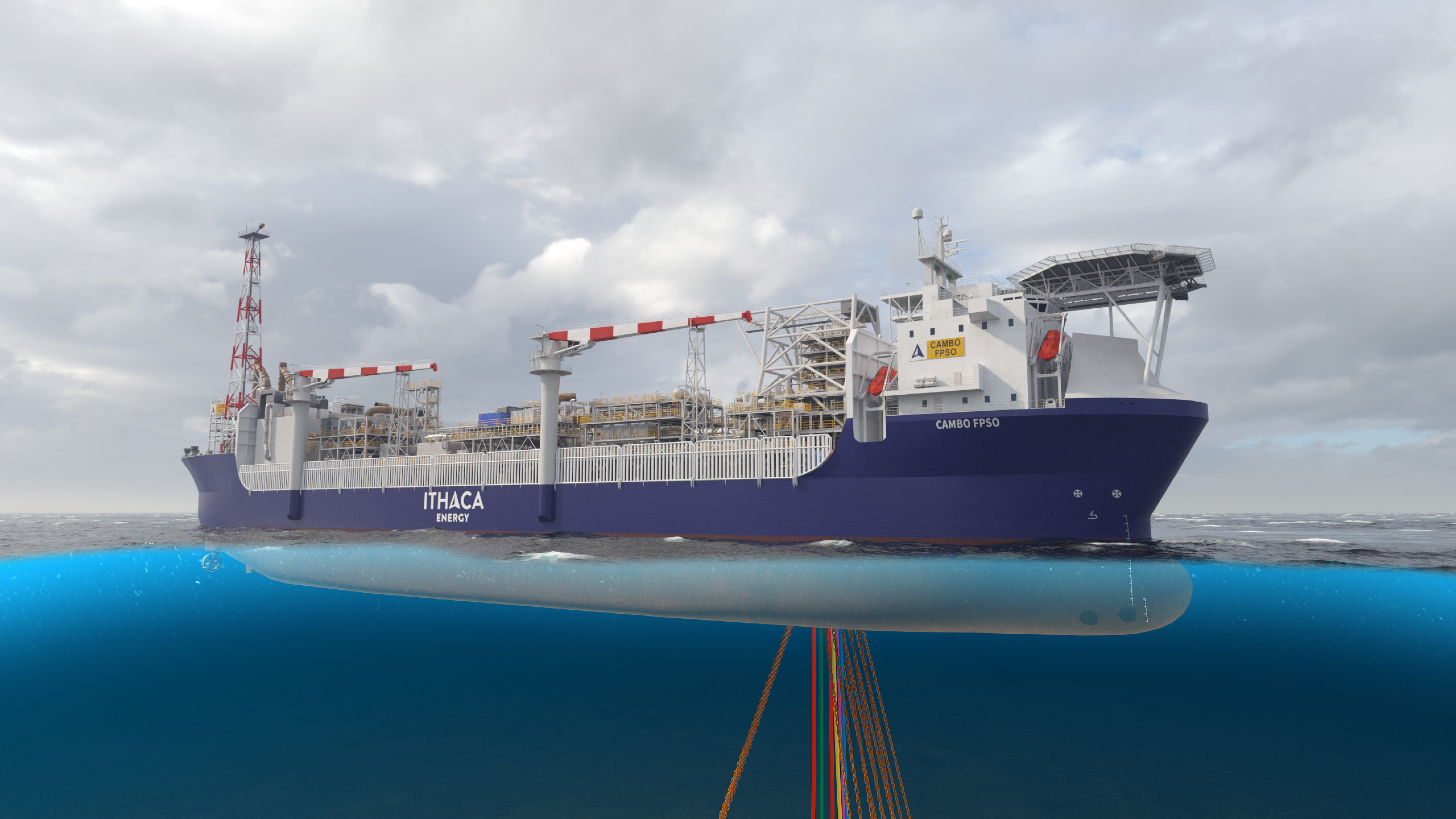
The Cambo field is the largest commercial pre-Final Investment Decision (FID) undeveloped oil and gas discovery in the UK North Sea.
The field’s development aligns with the UK Government’s North Sea Transition Deal (NSTD), delivering vital energy security and investment for the UK, in support of a managed energy transition.
We are committed to working with the UK’s world class supply chain to ensure that a significant portion of the project’s value is reflected in Scotland and the UK, and are committed to ensuring job creation and long-term sustainability.
Foreward from our executive chairman

"We seek to balance the need to deliver critical energy security with the need to reduce our environmental impact, while creating value for our people, shareholders, partners and communities.
We are proud to be moving the project forward towards a final investment decision (FID), following a period of material project review, including a technical refresh of the development concept during 2025, supporting additional value creation and the de-risking of the project."
Yaniv Friedman
About Cambo
With a 25-year production life, the field is expected to achieve production start-up in 2030-2031, produce beyond 2050 to 2055, making it a significant contributor to the UK’s energy security strategy.
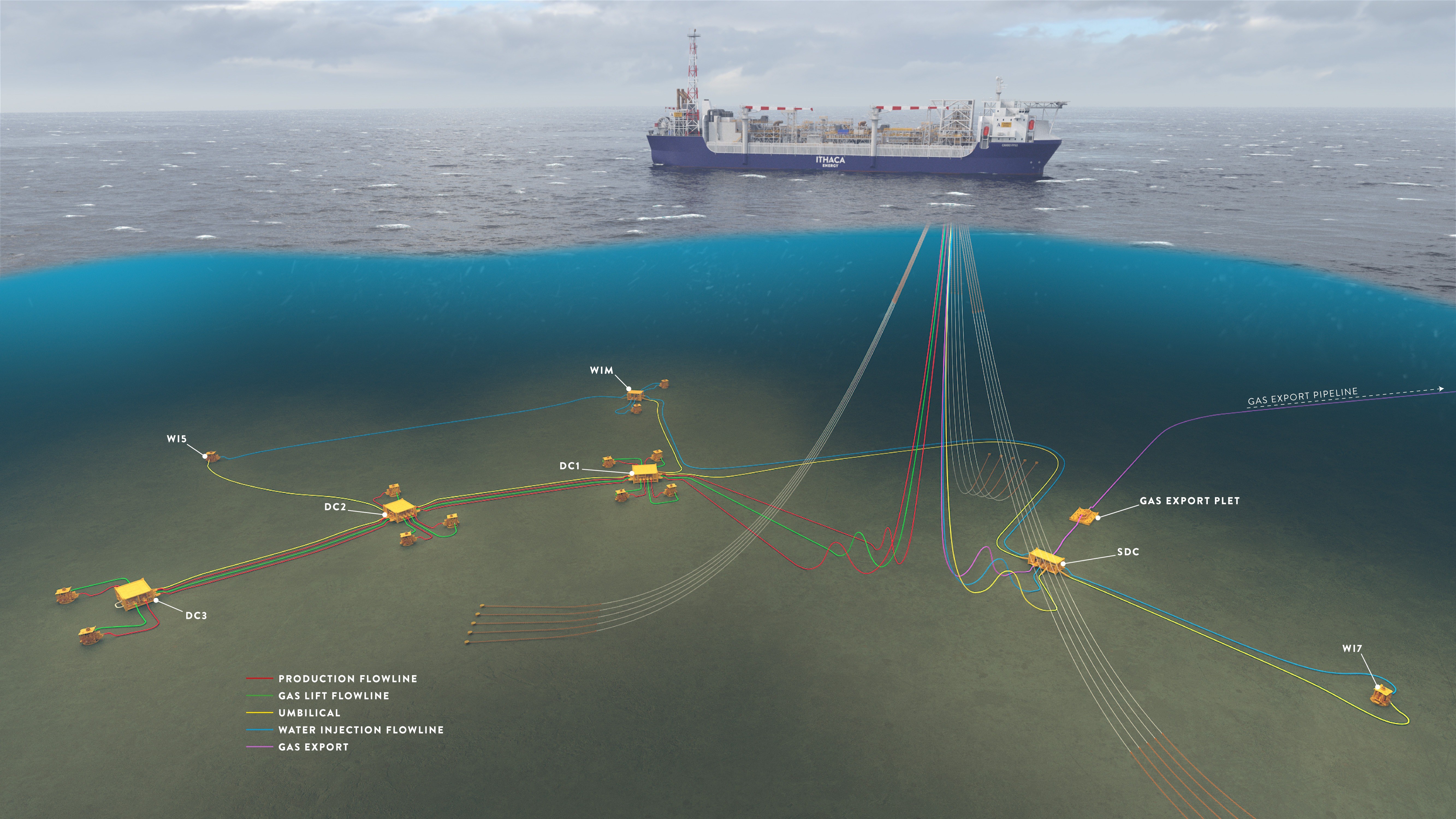
On successful project sanction, the development phase would run over multiple years and would include the construction of a new-build floating production storage and offloading vessel (FPSO) that would be permanently moored with thirteen subsea well tie-backs; comprising nine production wells across three drill centres and four water injection wells using two drill centres and a satellite structure. Produced oil will be exported via shuttle tanker while sales gas will be piped to the nearby field.
The FPSO will be built electrification-ready and would be able to switch to power-from-shore in the event a commercially viable, technically feasible and sustainable power supply was available. Prior to electrification, the field is expected to produce at 40% lower emission intensity than the UK average.
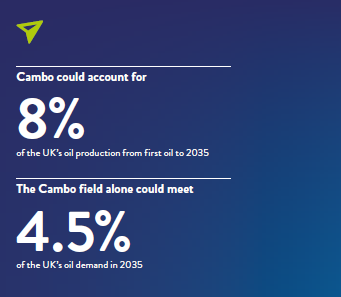
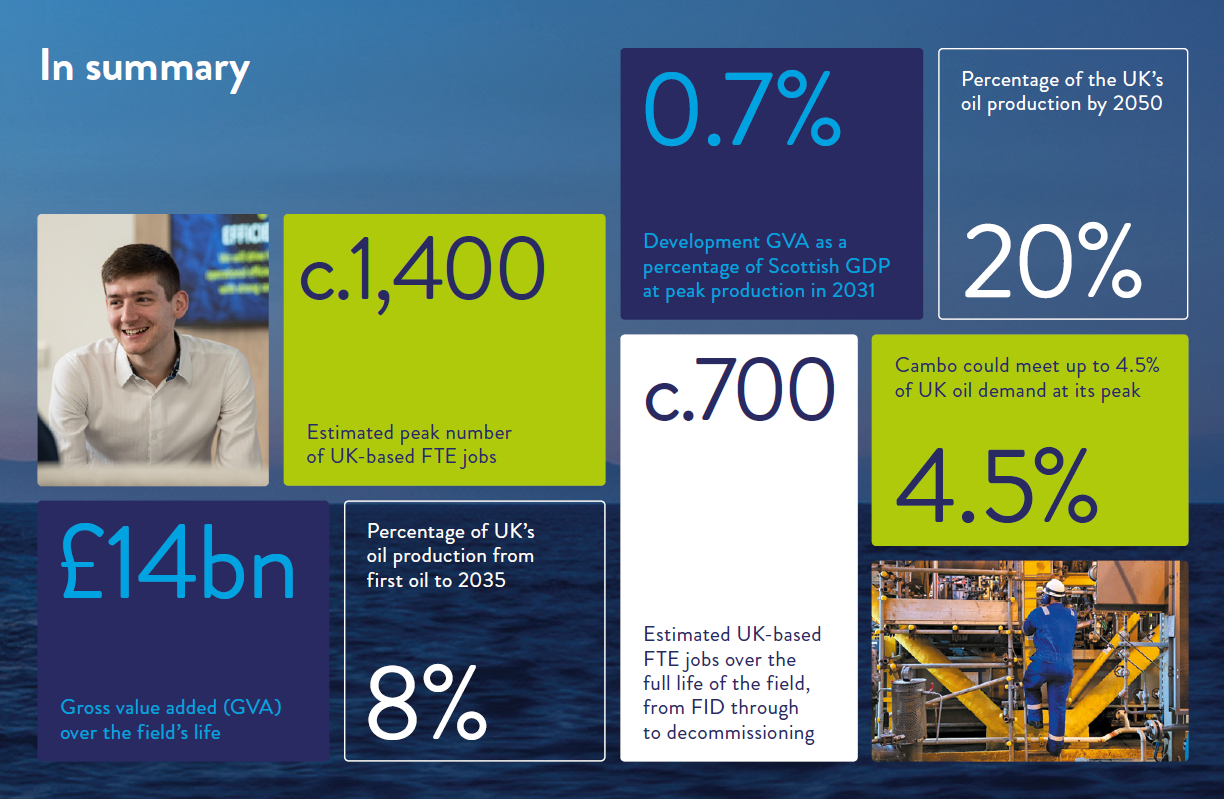
The design of the FPSO aims to extend Cambo’s plateau production to 44 kboe/d between 2031-2034. At plateau production, Cambo could account for over 8% of the UK’s oil production and the Cambo field alone could meet up to 4.5% of UK oil demand in 2035.
Investing in domestic production supporting value creation in the UK
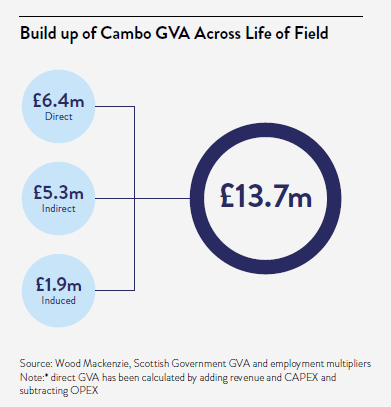
The Cambo development will require significant investment, resulting in substantial direct and indirect economic impacts for the UK.
The capital required to develop Cambo is over £3 billion and, over the life of the field, is expected to attract approximately £2 billion in operating expenses.
This direct investment would have indirect and induced economic impacts over the field life, such that the gross value added (GVA) of the development would be almost £14 billion over the field’s life. At peak production in 2031, the GVA of the Cambo development will be equivalent to 0.7% of Scottish GDP, and averaged over the life of the field would generate an annual GVA of £405 million.
The Cambo development also has the potential to deliver significant benefits to the Shetland community as a key stakeholder to the project, including electrification potential and supporting the local supply chain during operational and decommissioning phases.
Creating jobs for our highly skilled industry
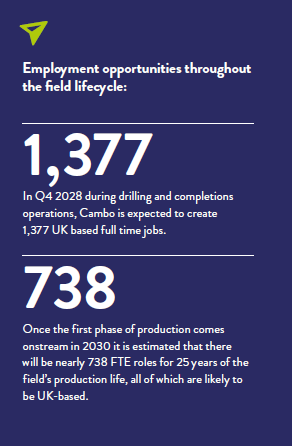
As a significant, multi-year development, Cambo has the potential to create substantial employment opportunities both during the development phase and throughout the life of field, providing 30 years of employment potential in the region.
These jobs will help to preserve technical skills throughout the supply chain, that are essential both for today’s energy landscape and a low carbon energy future, as part of a managed transition. The development and operation of the field will create direct jobs, the indirect impact of which will be to create further roles in the supply chain, in areas such as fabrication of equipment, well drilling and completions, and installation of subsea infrastructure. Collectively, these will drive additional jobs and broader wealth creation in the wider economy.
The Cambo development is estimated to support nearly 1,400 UK-based full-time equivalent (FTE) jobs (including direct, indirect, and induced jobs) at its peak in Q4 2028, and an average of over 738 UK-based FTE jobs over the full life of the field, from FID through to decommissioning.
Delivering critical energy security
Ongoing geopolitical tensions and uncertain energy markets continue to shine a spotlight on the energy sector and the criticality of developing our own North Sea resources to provide domestic energy security.
Even under a Net Zero demand scenario, the UK faces an enormous oil and gas deficit, highlighting the Cambo development as a proven material opportunity to bridge the supply gap and reduce dependence on volatile, high carbon intensity energy imports.
At plateau production, Cambo is expected to deliver over 44 kboe/d of hydrocarbons, comprising approximately 41 kbbl/d of oil and 16 mmcf/d of gas. Between 2031 and 2035, Cambo could contribute over 8% of the UK’s oil production, with its share projected to rise sharply due to rapid basin decline from 10% in 2031 to as much as 20% by 2050.
Cambo could meet up to 4.5% of UK oil demand at its peak. Under a net-zero scenario with rapidly falling oil and gas demand, UK oil and gas production, including Cambo, can only fulfil 36% of demand between 2030 and 2050.
Frequently asked questions
Development documents
Please note, the public consultation will close on 18th April 2026.
Contact Us
Reach out to find out more on how we’re redefining North Sea oil and gas production